
Facial and Body Technology
HIFU vs Surgical Facelift: Which One Should You Choose
HIFU vs surgical facelift: compare invasiveness, recovery, results, duration, cost, and risks to decide which lifting option is right for you.
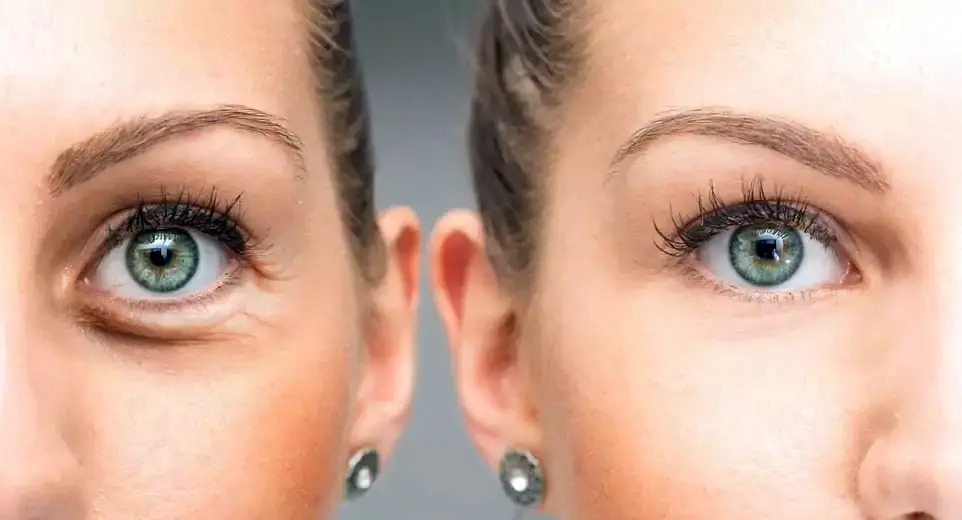
When the skin on your face starts to lose firmness, a very common question comes up: is a non-surgical lifting option like HIFU enough, or is it worth going under the knife with a surgical facelift? Both options aim for the same goal (restoring tension and definition to the face), but they do it in very different ways. In this article we compare HIFU vs surgical facelift criterion by criterion so you can make an informed decision.
What Each Treatment Is#
Before comparing, it helps to understand what each option involves.
HIFU (High-Intensity Focused Ultrasound) is a non-invasive treatment that uses ultrasound waves to generate controlled heat in the deep layers of the skin. That stimulus activates collagen production and produces a progressive lifting effect without incisions or general anesthesia. You can learn more in our guide on what facial HIFU is.
The surgical facelift (rhytidectomy) is a cosmetic surgery performed by a plastic surgeon. It involves incisions, repositioning of tissues, in some cases removal of excess skin, and sutures. It is performed under anesthesia and requires a recovery period. It is a major medical procedure that must be evaluated and carried out by a qualified surgeon.
Invasiveness#
This is the most obvious difference between the two.
- HIFU: Non-invasive. There are no cuts, no bleeding, and no scars. The device works from the surface of the skin down to the deep layers.
- Surgical facelift: Invasive. It requires incisions (usually around the ear and scalp), tissue manipulation, and sutures. Like any surgery, it carries a surgical risk that must be assessed by a specialist.
If the idea of going into an operating room gives you pause, HIFU is the alternative that avoids surgery entirely.
Recovery#
Recovery time greatly changes each patient's experience.
- HIFU: Practically no downtime. Most people resume their routine the same day. There may be mild redness or temporary sensitivity.
- Surgical facelift: Recovery is longer. Swelling, bruising, and the need for several days or weeks of rest depending on the technique are common. A full return to social life usually takes more time and must follow the protocol indicated by the surgeon.
Results#
Here it is important to be honest: the two treatments do not produce exactly the same outcome.
- HIFU: Offers a natural, progressive improvement in firmness, ideal for mild to moderate laxity. Changes appear gradually as new collagen forms.
- Surgical facelift: Can correct advanced sagging and excess skin that a non-invasive treatment cannot resolve. The change is usually more noticeable in cases of significant drooping.
Results vary depending on age, skin type, genetics, and each person's starting condition. That is why no treatment guarantees an identical result for everyone.
Duration of Results#
- HIFU: Effects typically last between 12 and 24 months, depending on lifestyle and aftercare. Many people choose periodic maintenance sessions.
- Surgical facelift: Tends to offer longer-lasting results that can hold for several years. Even so, natural aging continues and does not stop the passage of time.
Cost#
- HIFU: Generally represents a smaller investment per session and does not include operating room, anesthesia, or surgical fees.
- Surgical facelift: Usually has a significantly higher cost, since it involves a surgical team, anesthesiologist, facilities, and postoperative follow-up.
Risks and Considerations#
Every procedure has considerations worth knowing.
- HIFU: Side effects are infrequent and mild: temporary redness, sensitivity, or, in rare cases, small bruises. There are contraindications (metal implants in the area, pregnancy, certain conditions) that are reviewed during the evaluation.
- Surgical facelift: Being surgery, it carries risks inherent to any surgical procedure, such as reaction to anesthesia, infection, hematomas, or variable scarring. These risks must be explained and evaluated by a plastic surgeon before deciding.
Comparison Table: HIFU vs Surgical Facelift#
| Criterion | HIFU | Surgical facelift |
|---|---|---|
| Invasiveness | Non-invasive, no cuts | Surgery with incisions |
| Anesthesia | Not required (sometimes topical cream) | Local or general anesthesia |
| Recovery | Immediate or very short | Days to weeks |
| Laxity it treats | Mild to moderate | Moderate to advanced |
| When results appear | Progressive (weeks to months) | More immediate after recovery |
| Duration | About 12 to 24 months | Several years |
| Cost | Lower per session | Significantly higher |
| Who performs it | Trained aesthetic professional | Plastic surgeon |
Which One to Choose#
There is no single answer: the best option depends on your particular case.
- HIFU may suit you if you have mild to moderate laxity, prefer to avoid surgery, don't want long recovery times, and are looking for a natural, progressive improvement.
- The surgical facelift may be more appropriate if you have advanced drooping, significant excess skin, or want a more dramatic change, and you are willing to undergo a surgical process with its corresponding recovery.
In many cases, HIFU is an excellent first step or an alternative for those who are not yet at the point of needing surgery. The only way to know which is the best option for you is through a professional evaluation that assesses your skin, your goals, and your medical history. Learn the details of our HIFU treatment in Cuenca to understand what you can expect.
Conclusion#
HIFU and the surgical facelift are not rivals but two tools for different moments and needs. HIFU stands out for being non-invasive, comfortable, and quick to recover from; the surgical facelift offers correction in more advanced cases in exchange for a more demanding process. Remember that results vary from person to person and that any decision should be supported by a serious medical evaluation.
If you want to know which option best fits you, we invite you to book an evaluation with our team. We will analyze your case and explain, with full transparency, what to expect from each alternative.
Keep reading
Related articles
Facial and Body Technology
HIFU vs Botox: Which to Choose to Rejuvenate
HIFU or Botox? We compare mechanism, results, duration, and natural look to help you choose the best facial treatment without needles or surgery.
Read articleFacial and Body Technology
What Is Facial HIFU? Non-Surgical Lifting Explained
Learn what facial HIFU is, how HIFU 360 Max technology works, and why it's ideal for skin tightening without invasive procedures.
Read article
Facial and Body Technology
HIFU Facial Rejuvenation in Cuenca: Non-Surgical Lifting
Learn how facial HIFU works, its key benefits, and who may be a good candidate if you want firmer skin without downtime.
Read article