
Laser Treatments
Laser Mole Removal: Is It Safe and Scar-Free?
Discover how laser mole removal works. Procedure, recovery time, results, and why it is safer than other methods. Complete guide to mole removal.
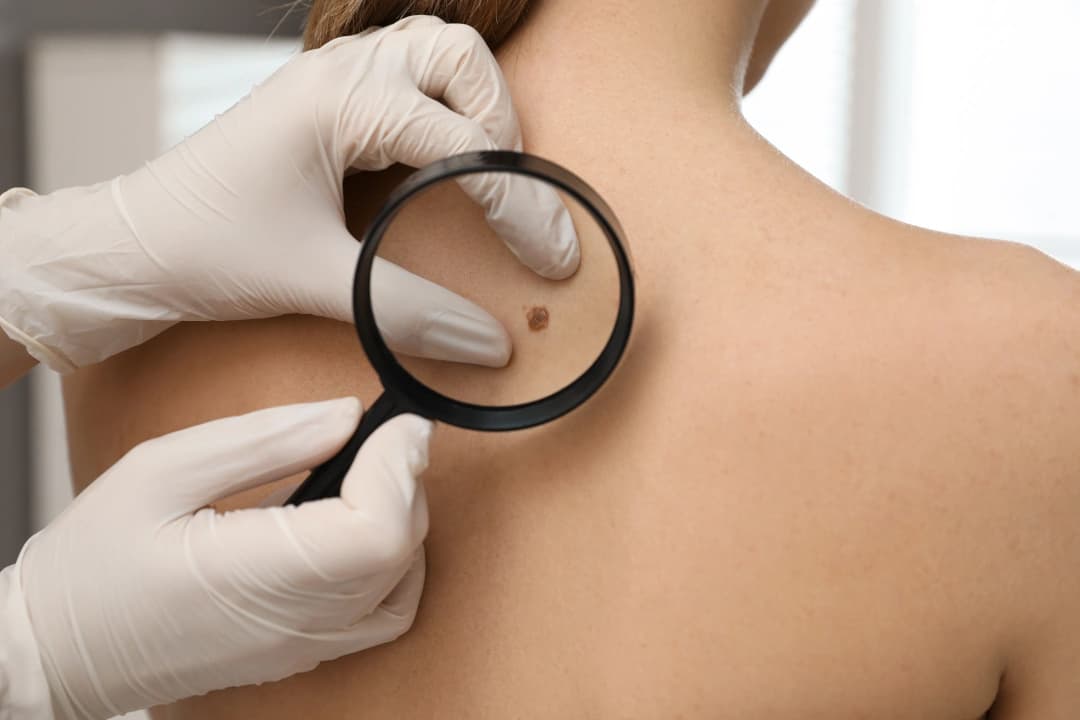
You have a mole you do not like. Maybe it appears on your face and you feel it affects your confidence. Or perhaps you simply prefer not to have it. The good news: laser mole removal is safe, quick, and delivers excellent aesthetic results. In this comprehensive guide, we will explore everything you need to know before making a decision.
How Laser Works for Moles#
Laser treatment uses concentrated, high-energy light to selectively destroy the melanin pigment that forms the mole. The laser emits pulses of light that penetrate the skin at specific wavelengths.
The process:
- The laser is directed over the mole
- Light pulses are absorbed by the melanin
- Heat destroys the pigment-producing cells
- Your body naturally eliminates waste through its lymphatic system
The main advantage: the laser selectively affects the mole without damaging surrounding skin, because melanin preferentially absorbs the energy.
Types of Moles That Can Be Removed#
Flat Benign Moles#
These light brown moles that are level with the skin or slightly indented respond excellently to laser treatment. They generally require 1-3 sessions.
Raised Intradermal Nevi#
These are elevated moles that protrude from the skin. Laser can flatten or completely eliminate them. They may require more sessions than flat moles.
Dysplastic Moles#
These moles with irregular edges and variable colors can be removed with laser, although it is important to have ruled out malignancy through prior dermatological examination.
Red Moles (Angiomas)#
Red moles caused by blood vessels respond especially well to certain lasers that selectively destroy the vessels. They are usually completely eliminated in just a few sessions.
Small Congenital Moles#
Small birthmark moles can be removed with laser. Large congenital moles generally require a different approach.
Hairy Moles#
Laser can remove moles that contain hair. It even destroys the hair follicle during the process.
The Procedure Step By Step#
Initial Consultation#
First, you visit the dermatologist who evaluates your mole. It is important to rule out that it is malignant. If there is any suspicion, a biopsy is performed first. If it is benign, we proceed with the laser.
During the consultation, documentary photos are taken, expectations are discussed, and a personalized plan is designed.
Skin Preparation#
Days before treatment:
- Avoid intense sun exposure
- Do not use self-tanner
- Keep the area clean
- Avoid irritants like acne medications if possible
On procedure day:
- Arrive with no makeup in the treatment area
- Inform us if you take medications that affect clotting
- Relax, the procedure is not painful
The Procedure#
The specialist cleans the area and applies topical or local anesthesia depending on the location. Then:
- The laser handpiece is positioned over the mole
- The laser emits short pulses of energy
- You will feel slight warmth or tiny pinches
- The procedure takes minutes (depending on mole size)
- Aftercare is applied
The mole may look slightly darker immediately after (this is normal).
Immediate Post-Procedure Care#
- Keep the area clean
- Apply SPF 50+ sunscreen
- Avoid scratching or manipulating the area
- Avoid direct sun exposure for days
- You can wear makeup after a few hours if needed
Recovery and Aftercare#
Recovery is one of the major advantages of laser treatment:
First 3 Days#
- There may be mild to moderate redness
- The area may be slightly swollen
- Mild burning sensation
- Most people can continue normal activities
First Week#
- Redness decreases significantly
- The area may look lighter or slightly darker (depends on mole type)
- Avoid intense exercise and saunas that heat the area
Weeks 2-4#
- Healing of the mole
- Possible mild peeling of the area (completely normal)
- The mole darkens and begins to shed
- Continue rigorous sun protection
Weeks 4-8#
- Mole gradually disappears
- Final healing
- Surrounding skin returns to normal color
Important: Resist the temptation to pick or pull off scabs. Letting them fall naturally minimizes scarring risk.
Does It Leave a Scar?#
This is the key question, and the answer is: generally NO.
Modern laser treatment leaves minimal scarring because:
- It does not create open wounds like surgical excision
- Recovery is controlled and orderly
- Your body heals naturally without excessive fibrosis
- The laser is highly selective to melanin
However, there are some cases where minimal scarring could occur:
- Very large moles (may leave slight depression)
- Personal tendency to keloid scars
- Lack of post-procedure care (scratching, sun exposure, etc.)
- Infection (very rare)
Any minimal scarring that might occur is generally unnoticeable at normal distance and can be treated with other procedures if necessary.
Comparison With Other Methods#
Laser vs. Surgical Excision#
Laser:
- Minimally invasive
- Quick recovery
- Minimal scars
- Multiple sessions sometimes needed
- No general anesthesia
Excision:
- Surgical, requires stitches
- Predictable linear scar but visible
- Slower recovery
- Definitive result in one session
- Higher cost
- Local anesthesia
Laser vs. Cryotherapy (Freezing)#
Laser:
- Precise and selective
- Controllable
- Effective for pigmented moles
Cryotherapy:
- Less precise
- Higher risk of hypopigmentation
- Better for warts than moles
- May require multiple sessions
Laser vs. Home Remedies#
Warning: Home remedies such as acids, herbal products, or "natural therapies" are dangerous and not recommended. They can:
- Cause severe scarring
- Cause infections
- Cause uneven pigmentation
- Fail to completely remove the mole (it may reappear)
Professional laser treatment is comparatively safe, effective, and affordable.
Ideal Candidates#
You are an ideal candidate if:
- You have a benign mole you wish to remove
- Your skin is healthy with no active infections
- You do not have active clotting disorders
- You can follow post-procedure instructions
- Your expectations are realistic
- You are not pregnant (generally recommended to wait)
- You have light to moderate skin pigmentation (laser works best on these)
Special Considerations#
Dark skin: Laser is still effective but requires additional care and selection of specific laser types. Consult with a specialist.
Pregnant women: It is recommended to wait until after pregnancy and breastfeeding.
Medications: Some medications (retinoids, certain antibiotics) may require temporary discontinuation.
Cost: How Much Does Mole Removal Cost?#
Price depends on:
- Mole size
- Depth and type
- Number of sessions needed
- Geographic location
- Laser technology
In Ecuador, typical cost ranges from USD 50-200 per session for small to medium moles. Larger moles or those requiring multiple sessions may cost more.
Note: At Jenny Vera Spa, we offer free evaluation. During the consultation, we determine the likely number of sessions and provide transparent pricing.
Important Frequently Asked Questions#
How many sessions do I need? Flat moles: 1-2 sessions. Raised moles: 2-4 sessions. Red moles: 1-3 sessions. Your dermatologist will personalize after the first session.
When can I return to work? Immediately. Most people return to their activities the next day.
Does the mole reappear? No, if it was completely removed. However, new moles can form in other areas due to genetics and sun exposure.
Can I go to the beach afterward? It is recommended to avoid the beach for 2 weeks to prevent infection and ensure optimal healing.
What if it does not respond well? Most moles respond excellently. If response is poor, another laser type can be tried or excision considered.
Does it hurt? Minimally. You will describe it as small pinches or warmth sensations. Tolerable without anesthesia, though topical is applied for comfort.
Does it affect other skin lesions? No. The laser is selective for melanin. It does not affect freckles or non-pigmented areas.
Before and After: What to Realistically Expect#
Before: Visible mole, dark brown or black in color, possibly protruding.
Immediately after: Redness, possible temporary darkening, minimal swelling.
After 2 weeks: Reduced redness, scabs shed, clear improvement in appearance.
After 4-8 weeks: Mole gone or significantly improved. Area skin slightly lighter than surroundings temporarily (evens out in weeks).
Final result: Smooth skin with no visible mole. No notable defect.
Why Choose Jenny Vera Spa#
At our aesthetic spa in Cuenca we have:
- Trained dermatology specialists
- Latest generation laser technology
- Personalized approach for each case
- Safety and quality guarantee
- Competitive and transparent pricing
Do not let a mole affect your confidence. It is a simple decision with excellent results. Learn more about our laser mole removal treatment in Cuenca.
Conclusion#
Laser mole removal is a safe, quick, and effective procedure that delivers excellent aesthetic results with minimal scarring. For most benign moles, it is superior to alternative methods in terms of safety, recovery, and final results.
If you have a mole that bothers you, schedule your free evaluation here. Our team will determine the best treatment plan for you.
We also recommend reviewing our article about types of moles to better understand what you are removing, and about dangerous moles to ensure it is safe to proceed.
Your confidence and aesthetic satisfaction are our priority.