Laser Treatments
Is This Mole Dangerous? Signs You Should Never Ignore
Discover the 5 most critical warning signs indicating a dangerous mole. Complete guide to suspicious moles, ABCDE rule, and when to see a dermatologist.
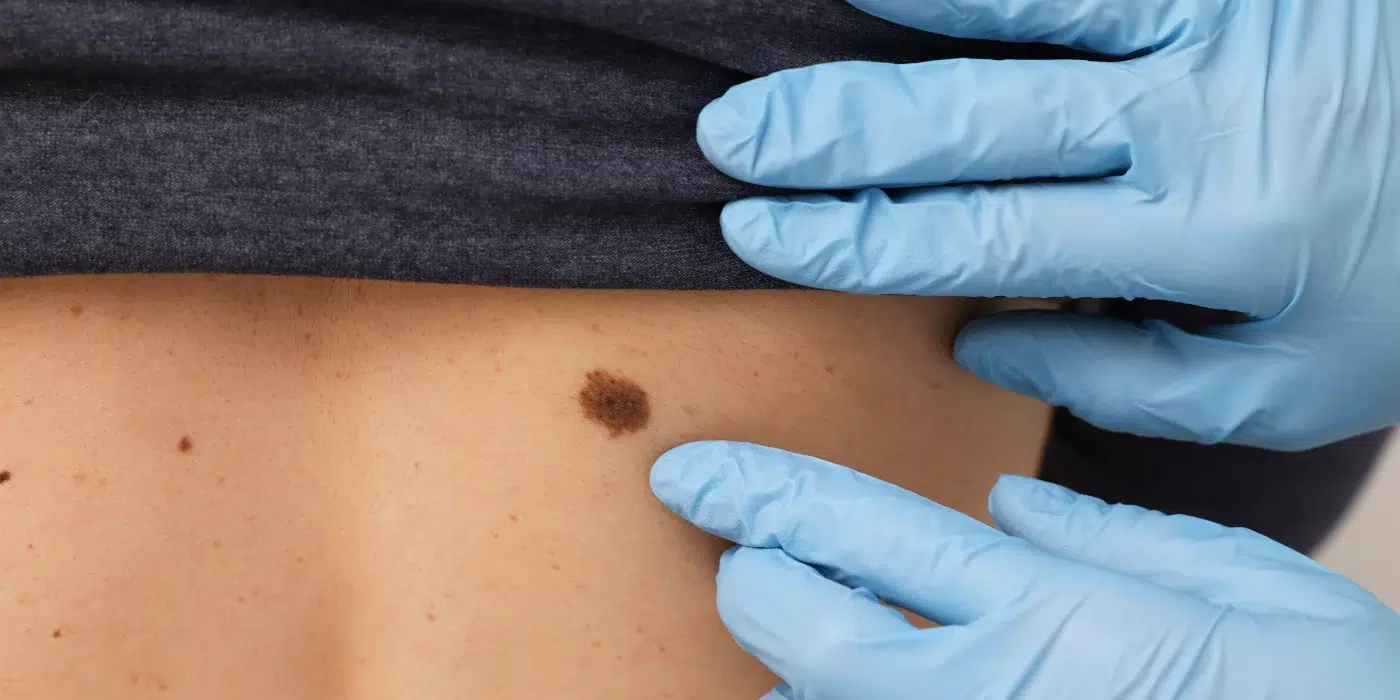
A mole that seemed harmless a few months ago changes shape or color. You have a small reddish spot that itches. You wonder: "Is it dangerous?" In this article, we reveal the most critical warning signs that require immediate medical attention. Because when it comes to your skin, ignoring the signs could be very costly.
The 5 Most Important Warning Signs#
If your mole shows any of these characteristics, schedule an appointment with your dermatologist without delay:
1. Rapid Changes in Shape, Size, or Color#
This is probably the most important sign. A mole that remained stable for years and suddenly begins to change is a red flag. Benign moles are predictable and slow in their development.
If your mole grows in weeks or months, if its shape becomes irregular, or if new color tones appear within it, this requires professional evaluation.
Real example: A mole that was round and dark brown becomes asymmetrical with black and reddish zones in just a few weeks. This is abnormal and requires attention.
2. Bleeding or Discharge Without Cause#
A mole that bleeds spontaneously, without having been injured, is concerning. Similarly, if it produces fluid, crusts, or discharge, it needs medical evaluation.
Benign moles do not bleed easily. If yours does, even with light touches, consult your dermatologist immediately.
3. Persistent Itching or Pain#
Most people feel nothing in their moles. If yours itches constantly, hurts, burns, or causes discomfort, this is an important sign.
Itching can be caused by changes in the cells that make it up, and while it does not always indicate malignancy, it definitely requires professional evaluation.
4. Size Greater Than 6 Millimeters#
If your mole measures more than 6 millimeters (approximately the size of a pencil eraser), it should be monitored periodically. Large moles have a slightly higher risk of malignant changes.
A mole that starts small and grows to exceed 6 mm is especially important to examine.
5. Multiple Irregular Moles#
If you have more than one with irregular characteristics (jagged edges, variable colors, size greater than 6 mm), your risk increases. This pattern is called "dysplastic mole syndrome" and requires annual surveillance.
The ABCDE Rule Explained With Examples#
This is the tool dermatologists use to identify suspicious lesions. Let us see each letter with real examples:
A - Asymmetry#
Draw an imaginary line through the center of your mole. The two sides do not match.
Example: One side is more round and the other has an extension or irregular protrusion.
A benign mole has symmetry, like a coin. A suspicious one looks more like an irregular stain.
B - Irregular Border#
The edges are not smooth or defined, but rather jagged, wavy, or blurry.
Example: It looks like someone drew it with a colored crayon while shaking. Melanomas frequently have poorly defined borders or small protrusions.
Normal moles have a clear border, as if they were cut with scissors.
C - Variable Color#
The mole is not a uniform color but contains multiple shades.
Example: Same mole with light brown, dark brown, black, and even reddish or whitish zones. This is a very concerning sign.
Benign moles have consistent color throughout their surface.
D - Diameter Greater Than 6 mm#
If it measures more than half a centimeter, it requires evaluation. Although many large moles are benign, size is a risk factor.
How to measure: Use a pencil eraser (approximately 6 mm) as a reference. If your mole is larger, it is time for a check-up.
E - Evolution (Changes)#
Any significant change in weeks or months is concerning. This includes growth, color change, shape change, development of bumps, bleeding, or itching.
Example: Three months ago it was a small brown spot. Now it is larger, darker, with irregular edges, and occasionally itches.
Myths About Dangerous Moles#
There are many false beliefs that cause unnecessary concern or false reassurance:
Myth 1: "All large moles are dangerous"#
Reality: Many benign congenital moles are very large. Size alone does not determine dangerousness. What matters is whether it is changing.
Myth 2: "Dark moles are always dangerous"#
Reality: Dark color does not indicate malignancy. Many benign moles are dark brown or black. What is concerning is a change in color.
Myth 3: "Moles from birth never become cancer"#
Reality: Although rare, congenital moles can undergo malignant changes. That is why they require monitoring, especially if they are large.
Myth 4: "If it doesn't hurt, it is not dangerous"#
Reality: Skin cancer can be completely painless. The absence of pain does not guarantee safety.
Myth 5: "Scratching a mole makes it cancerous"#
Reality: Scratching a mole does not cause cancer. However, injuring it requires proper care and cleaning. If you have injured it, keep it clean and monitor it.
What to Do If You Have a Suspicious Mole#
If your mole shows any of the characteristics described, here is your action plan:
Step 1: Take Photos#
Document the current appearance of your mole with clear photos. This allows you to compare changes over time. Use the same distance and lighting each time.
Step 2: Schedule an Appointment#
Do not wait months. Contact a dermatologist in the coming days. It is better that it be a false alarm than to ignore something serious.
Step 3: Gather Information#
Quantify the changes: how long have you noticed the mole, when did it start changing, does it itch or bleed, is there a family history of skin cancer.
Step 4: Consider Treatment Options#
If the dermatologist confirms it is benign but you want to remove it for aesthetic reasons, laser treatment is safe and effective. If there is any concern, a biopsy or excision confirms the diagnosis.
Why Not to Ignore It: Real Statistics#
Melanoma is the most aggressive form of skin cancer. If detected in early stages (Stage 1), the 5-year survival rate exceeds 99%. However, if detected in advanced stages (Stage 4), it drops dramatically.
The difference: early detection. Waiting "to see if it changes more" can be extremely dangerous.
When one of your moles shows changes, it is not paranoia to have it checked. It is proactivity. It is responsibility to yourself.
When to Urgently Visit the Dermatologist#
Seek immediate care if:
- Your mole bleeds without a known cause
- A dramatic change appears in weeks
- You develop signs of infection (warmth, pus, severe inflammation)
- You have multiple moles with irregular characteristics
- There is a strong family history of melanoma and you are noticing changes
Important Frequently Asked Questions#
What happens at the dermatology appointment? The dermatologist will examine the mole under magnification (dermoscopy) and compare with previous photos if available. If there is doubt, a biopsy may be taken (small skin sample analyzed in the lab).
Does a biopsy hurt? It is not painful. Local anesthesia is applied and a small sample is taken. It takes less than 5 minutes.
What if they confirm melanoma? Detected in early stages, treatment options are very effective. That is why early detection is so critical.
Can I remove the mole anyway? Yes, although the dermatologist may prefer to monitor it if there are atypical features. Laser treatment is safe for benign moles.
How often should I check? If you have normal moles, annually. If you have multiple dysplastic ones, every 6 months. Your dermatologist will personalize the schedule.
Conclusion: Your Health Is In Your Hands#
Your skin speaks to you. Sometimes with small changes, sometimes with dramatic changes. The key is to listen to it. Dangerous moles do not appear out of nowhere with a warning bell. Usually, they begin with small changes that many people ignore.
Do not be that person.
If you notice any of the signs described in this article, schedule your dermatological evaluation here. At Jenny Vera Spa, we have specialists trained to evaluate suspicious moles and offer the best treatment options, from periodic monitoring to our laser mole removal treatment in Cuenca.
Your skin is your responsibility. Protect it as if it were the most valuable thing you have. Because, in reality, it is.
You might also be interested in reading about the types of moles and how to safely remove moles with laser.
Keep reading